








It begins with an email invitation. “Hi Aaron~I hope this finds you well!
We have had a cancellation on the Nicaragua Cup of Excellence international jury…”
Done.
I arc from Vancouver to Houston, Houston to Managua, bruised but not broken. The first night we are connected with our host, Roberto Bandana (President of ACEN), a charismatic man with whom we spend the coming day together.
Managua is the usual blur of Central American detritus. Potholes, incongruent drivers and stunning oases of opulence, set against a backdrop of poverty that passes by in a blur. Welcome to Nicaragua.
As a visiting dignitary, your host will almost invariably bring you to the most sanitized, Middle America type restaurant in the fiefdom. Do they not know that the lure of foreignness is whispering in our ear? That we desire to step outside our comfort zones and into something other-something distinctly Nicaraguan? I want street food, dizzyingly aromatic meats off the grill, warm tortillas and a cold Nicaraguan beer served on patio furniture under a bare bulb and dirt floor. I want an experience that lifts the layers of the country’s soul, exposing authentic people and places. Instead I settle for an English speaking waiter, a warm orange pop and seafood pasta in cream sauce.
Sunday April 13, 2008
We were invited to spend time with Roberto for a drive to Jinotega, with a visit to both his mill and farm. Roberto’s coffee is known as Don Paco, named after his father, who only recently passed away. His legacy is alive and well in the meticulous, forward thinking spirit of his son’s coffee operation. He recently hosted three baristas from Scandinavia to learn from them and to etch into them an understanding of the coffee producer. Who else is doing that?!?
Our first stop is to the Don Paco dry mill outside Sebaco. The peppering of dry mills along the side of the road at this point are the first obvious sign that coffee is the blood that pumps through this countries economy.
The mills are a confusion of questionably maintained buildings, containing questionably maintained equipment. Scattered across the ground are fibrous nylon bags of parchment drying or resting or rotting…some combination of the above. Someone will buy and drink this coffee. Coffee is a commodity. Heartbreaking to think what just a little more care could have yielded for the coffee now in those bags.
Isn’t everyone on some continuum of Specialty with those still not yet there at least working to get there? Uh, no.
Cafe Don Paco Drying Patios
Roberto’s property is up and away from the road. Inside the gate there are both drying patios and raised drying beds, an unusual sight in Nicaragua and a further nod to the already glimpsed progressive tact of Don Paco. At the recently upgraded lab there is frenetic activity. The sample roaster fills the small space with an inimitable, sweet roasting smoke perfume. This is the dry mill nerve center where samples are catalogued, roasted and cupped.
Don Paco Dry Mill
Roberto has ambitions to expand the new space with more room to cup and additionally to install an espresso bar. A taste for espresso is a bug he picked up at a recent Nordic Barista Competition. The flat out sex appeal of the baristas work…c’mon, who can resist it? Espresso is an untapped facet of coffee for this life long producer who has focused exclusively on the finer points of production, a lifetimes worth of knowledge to pursue. Good things to come at the Don Paco dry mill.
Before departing we are served fragrant cups of coffee in small china cups. It is exquisite. A nectar sweet cup with a dancing caramel finish that plays on our tongues long down the road. Lovely and what we had got on a plane for in the first place.
Matagalpa is a fleeting memory, alive with colour and vibrant street life but there is no pause to get out and walk-another time.
We finally pile out of the truck at Roberto’s farm, El Quetzal. A beautiful spot, serene amongst the legions of green trees on the cusp of the next flowering.
Farm house at El Quetzal
The house where we lunch was simple with skylights giving the space a diffused, haunting, divine light. Surrounding us is a farm covering 300 acres from which 16 containers of coffee will be shipped. It’s planted with a mix of catuai, yellow catuai, cattura, maragoypes etc. with plans for more. The nursery has 200 000 seedlings ready to go, including a small, small bunch of the vaunted geisha varietal.
Baby Coffee Trees
Lunch was a classic mix of rice, a firm white cheese, beans and white corn tamales. Simple, satisfying and deeply nourishing, washed down with beer, coke and closed out with a cup of coffee. Altogether a refreshing pause in the day.
Another hop has us in Jinotega to settle into the hotel. I deke out to explore before the sweet light of the late afternoon completely disappears.
Jinotega Church-One of Two
The evening is our first glimpse into what every evening that follows will look like. The next 3 days will pass, carbon copied from the one prior. Cup, cup, lunch, cup, quick break, massive party-repeat.
Obviously a celebration is in order to welcome the International guests and to commemorate the beginning of another Nicaraguan COE, an event that has been a portent of life changing potential to producers in Nicaragua. Something memorable is appropriate.
The venue is a massive palapa, decorated with neon Corona bottles, bullhorns, license plates (from Ontario no less!) and a glowing Pall Mall Cigarette sign. I could be in Cancun on Spring Break. In the corner there is a high school band and the head table is plump with local political luminaries coffee related and otherwise. There is blanket video and digital picture coverage. Anything that moves, any moment both candid and scripted is recorded. Music pours forth from speaker stacks and the packed house is regaled with song, speeches and dance troupes. Liquor pours forth like the proverbial wine, which in Nicaragua is really rum; seven years old and slow aged in wood. You’re brushing your teeth with the stuff by the end of the week.
The take home message is this, Jinotega is fiercely proud of their coffee and their reputation. The COE is their 649 lottery with all its inferred life changing potential. “Always be nice to people who play Lotto 649” would equally apply to those who play the COE.
We sleep the sleep of conquering heroes.
Monday April 14th, 2008-Calibration Day. You’re only as good as your last event.
These affairs are unquestionably tense with the ever looming possibility that although all of us in the room cup coffee for a living-we’re really all shysters living in our own little bubble and today we get called out.
Head Judge Sherri Johns polling the International Jury
Less hazing ritual than it has the potential to be, it is nonetheless an often choppy start to these sort of events where the participants shake off the fatigue of travel and a strange bed to feel out the score sheets, their fellow jury members and ultimately the inaccurate science of using a number to express the decidedly subjective qualities in a cup of coffee.
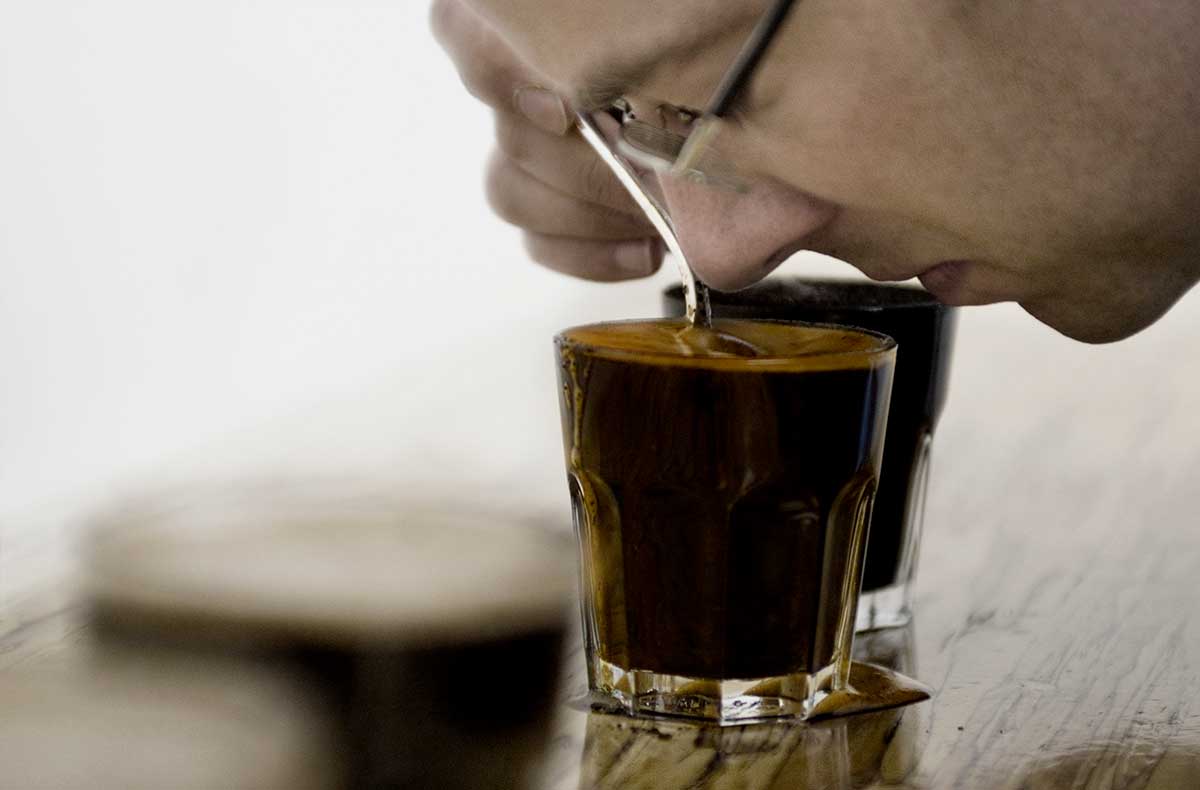
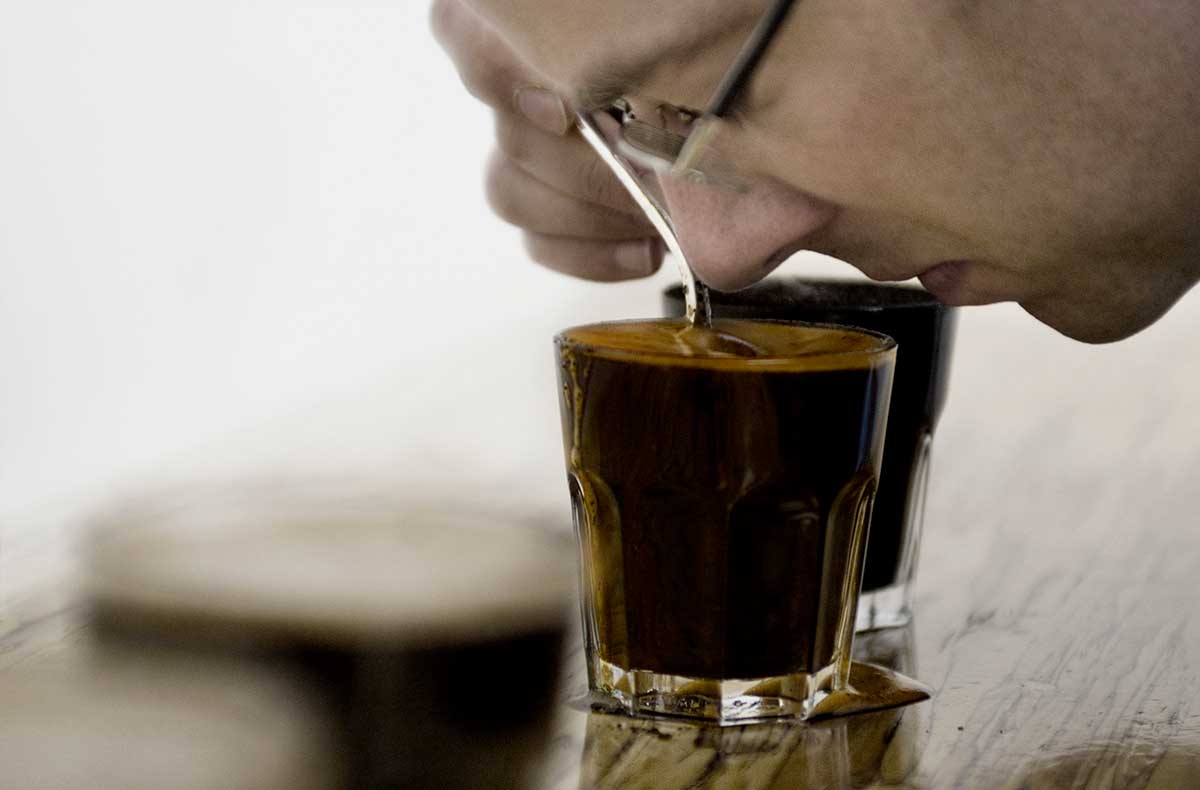
We do three passes of 6 coffees, four jurors to a table. We gather, post cupping, to compare notes and look at how the groups’ scores are spread with the head judge asking “How many at 79 and below? How many at 80-83…?” and so on down the line.
Ideally we’re looking for agreement and fortunately this is more common than not. There are occasions however where opinion is divided and scores for a given coffee can scatter across a broad range. Such disparity, although initially discouraging, often draws out further discussion and an opportunity to learn. Good things.
The second table is to re-score the same coffees in the same order. Look at them again, hopefully fine tune your expressions of that coffee with a score out of 100 and squeeze a tighter grouping out of the jury.
The coffees on the table are from those most recently culled by the National Jury. Those coffees that just missed moving into the top 60 to be vetted by the International Jury. Good coffees to be sure but just a whisper off making a critical cut.
We are also able to compare our scores on these coffees with that of the National Jury who had previously scored these coffees, ultimately electing to eliminate them. Their scores are a valuable mirror for self-reflection and to answer the haunting question “where do I sit in all of this?” No small consideration and all the more pointed in light of the fact that National Jury members typically out cup any of the hot shot imports from the International Jury backwards and forwards. Really. These people have put their time in, often cupping all day, every day with years under their belt. Their palate resolution is admirable and they are quick to discern the tree varietal just from the cup quality-incredible. The National Jury members should be making the final selection instead of us. As it is, two of the crew joins the International Jury for the remaining selection
Lunch is taken back at the hotel. A fine lunch provides what I think will be a constant thread of our meals here in Nicaragua. Flavourful, satisfying food all chosen with a nod to keeping the jury and more importantly their palates in peak form.
Food goes hand in hand with drink. A fine thing arguably enjoyed with an elevated gusto by coffee professionals. It could be our relish for flavours or hell just a real zest for life that makes the average coffee professionals thirst, how shall I say, abundant.
Victoria Beer-The Coffee Professionals Choice
I didn’t come to Nicaragua to drink beer. I am not on vacation. I am here to learn and experience new things in the ever-unfolding Neverneverland of coffee. A successful trip would be knowing that myself and fellow jury members were able to bring a singular focus to tasting and scoring the final 60 coffees and in turn to articulate worthy coffees to be offered up for auction. To isolate ambassador coffees for Nicaragua that showcase the depth of a talented and proud coffee producing country. Peoples lives are changed, or not, by our selection.
Late nights and abundant libations work against such an end for me. This is more comment than critique and perhaps a pile of beer is de rigueur for many in an evening. I’m not suggesting getting all Howard Hughes about it and walking around with Kleenex boxes on our feet but perhaps something involving a smidge more restraint in light of the stakes would be worth considering.
The result of the calibration day? Decidedly inconclusive. I am haunted by coffee number 3, a favourite for me in the first round, decidedly less so in the second round and then shows up to the last round as the starlet, stealing the show with a tangy, butter lemon persona and an expressive structure. This from a coffee that has been removed from the competition for being “defective” only to receive the highest scores of the day by our group. Bizarre. The more you know, the less you know.
This evening, P-A-R-T-A-Y. Again.
The Evenings Entertainment
Tuesday April 15th, 2008
Today is the first day of cupping that really matters. Three flights of 10 coffees. Cupping takes place for an hour, followed by a half hour discussion. New friends in my lower intestine conspire against me and I struggle through much of the day. It is made even more difficult by numerous low scoring cups, some less than 80. We have 60 of these coffees to get through, from which we will choose the top 10. Trying to decide between an 81 and an 83 is a thankless and difficult process. Anything less than 84 is not considered Cup of Excellence. We do this again tomorrow. What has been interesting is seeing how the National Jurors score relative to the rest of us. There is also a gentleman here who was a buyer for Starbucks that has been interesting to talk to. Finally, a fellow juror and myself spend some time flogging the defense of Fair Trade coffee after hours. FT is not a popular thing amongst some of the jurors. Interesting if not a little old.
I crawl to the end of the first full day of cupping. What a cupcake. It’s got to get more glamorous tomorrow.
Wednesday April 16th, 2008
Day two of playing for keeps. I’m feeling better, seeing the coffee better and there is a general consensus that the tables are better today. Great coffee brings a tangible lift to the judges who enthuse over a few of the cups on the table. Working through superlative cups creates a sense of occasion. Middling wasn’t what any of us came all this way for.
Later that night we learn the selection of coffees moving forward was fairly tight. Sixty cups reduced to twenty-eight. Three of the entrants eliminated due to phenol. Tomorrow is set up with 4 flights of 7. We’re able to take a bit more time with each coffee with only 7 on the table instead of 10 and I’m partial to that. It’s one thing to move through a bushel load of coffees and establish some simple “clean cup” criteria but to articulate the acidity to within a half point…I like to take a bit more time with each cup.
Thursday April 17th and Friday April 18th, 2008
Two more days pass by in a blur. For those who haven’t cupped professionally the closest thing I can relate it too is studying. All your focus and attention is brought to bear on the coffee for an extended period of time. It can be tiring and it isn’t always easy to bring that kind of intensity and focus to the table. You’re tired, missing your family or perhaps your lower intestines are on a wildcat strike and uh, misbehaving.
Thursday we cup through the 28 coffees establishing order. Friday the top 10 coffees are re-cupped for a final look and ordering. Again, bringing a more exclusive, less distracted look to the cups, reminding ourselves that these are the finalists. Speak, or forever hold your peace.
Perhaps it is a question of consistency from table to table but it is staggering to me that some of the coffees, even as we reduce the selection to the cream, garner little praise or affection as I’ve seen them on my table and yet are a world-beater for someone else at another table. What can one do but listen and hope to learn? It is unfortunate the judges discussion happens away from the table and we are unable to revisit the coffees for a final look and in turn miss the opportunity to discover a previously overlooked facet that another juror could have drawn our attention to.
There is also a tendency for jurors to score up as the competition evolves. A handful from the final crop of coffees get nudged into the ‘90s where in the two days prior, very few coffees rated that kind of merit. I disagree with this, as our evaluations in cupping are to be as objective as humanly possible. To that end, if you are dissecting a coffee by it’s components it is odd that “Body” that rated a 6.5 yesterday is all of a sudden a 7.5 or maybe even an 8 out of 8 now that we are in the top 10. A generous and necessary score if any coffee is going to climb to 90+ heights.
Less objective are the descriptions that are a critical and much valued component to a given coffees appeal, especially come auction time. I think we’ve all looked at the cut sheets for winning coffees and compared our notes to those of the International Jury prior to auction. This competition was a bit more verbose than others I have attended, disconcertingly so. Maybe my acute interest in authenticity is blinding to the greater good that flowery prose (something I am on record of defending by the way) can achieve. But when every single coffee offers up a lengthy and poetic list of words, it amounts to nothing. They effectively cancel each other out. There is no differentiation when everyone is saying the same thing, even if what is being said sounds really good. Aren’t coffees at this level capable of being great without needing the support of effusive descriptions?
Wine lives in the same confused world. Often the $15 bottle garners the same glamorous description as the more boutique offerings. You’ve effectively said nothing. All things being equal I’ll spend less for the same thing…But I don’t and I would guess neither do you. Flowery descriptors for a sub $20 bottle of wine? C’mon. I love that the Italians and French give you a refreshing break from the business of spin. If it’s a vintage year from a well-known producer, who cares what the description says? There often isn’t one. It’s going to be damn good wine with or without pretty labels and flowery descriptions.
Could the COE survive on such a Spartan approach? If a coffee is top 10 this year from a farm that has had other top 10 performances in the past, what more do you need to know? Try it, it’s solid. The top 10, heck the top 25 coffees are damn good coffees. They’ve come through 500 other coffees and leap frogged through cupping table after cupping table to arrive at this point. Impressive.
But I digress.
The week ends with a grand celebration. The top 25 producers are called up to the front, applauded and congratulated. There is rejoicing and there is despair. Turn around and look at the long faces of those who didn’t make the cut. They knew they were in the top 60. They made the trip to the event this evening hoping to be in the money. Not this year. With great heights there must be great depths. For all the reverie and joy of those whose coffees made the “Sweet 25” and will see their coffees auctioned off on May 27th, there is only next year for the rest of them.
Is the COE still a fantastic event? Absolutely. It is in principle and practice one of the most successful endeavors in Specialty Coffee. It puts cup quality at a real premium above all else and asks the players to back up the talk with real money to buy the best. A dramatic process from beginning to end with each chapter, from cupping selection, to auction, a date with destiny. Utterly memorable.
Jinotega Church-Center of town